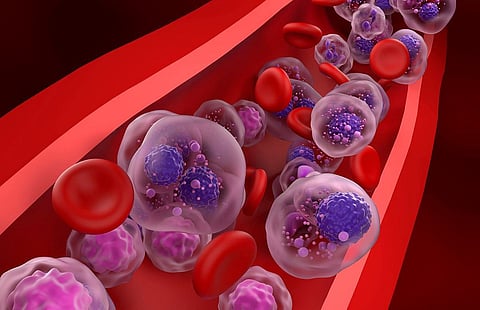

THURSDAY, Feb. 26, 2026 (HealthDay News) -- Among patients with multiple myeloma (MM) undergoing autologous stem cell transplantation (ASCT), atrial fibrillation (AF) is a frequent and high-risk complication, according to a study published online Feb. 17 in JACC: CardioOncology.
Olayiwola Bolaji, M.D., from the Memorial Sloan Kettering Cancer Center in New York City, and colleagues characterized the incidence, predictors, and prognostic implications of AF in a retrospective study involving 801 patients with MM who underwent ASCT between 2016 and 2022.
The researchers found that 70 patients (8.7 percent) developed posttransplantation AF during a median follow-up of 36.2 months. The cumulative incidence was 5.5 and 9.0 percent at 90 days and three years, respectively, with a median onset of 13 days. Age older than 65 years, prior paroxysmal AF, and obesity were independent predictors (hazard ratios, 1.88, 6.19, and 2.00, respectively). Associations were seen for left atrial volume index >34 mL/m2 and corrected QT interval >480 ms with AF; after adjustment, these associations were no longer statistically significant. Corrected QT interval >480 ms remained a significant predictor among patients without prior AF. Posttransplantation AF conferred a fivefold higher risk for all-cause mortality and a 4.5-fold higher risk for nonrelapse mortality in a multivariable analysis.
"Our results support risk-stratified monitoring strategies," the authors write. "Patients with multiple risk factors -- particularly older individuals with elevated comorbidity scores and cardiac abnormalities -- may benefit from extended telemetry monitoring during and after ASCT."
Several authors disclosed ties to the biopharmaceutical industry.
