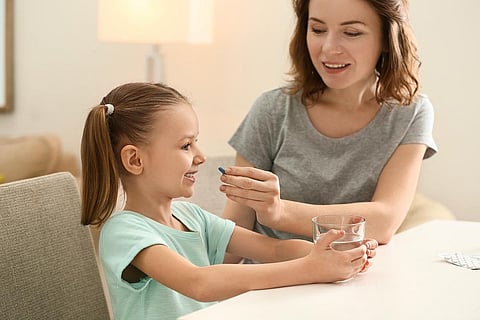

FRIDAY, April 24, 2026 (HealthDay News) -- About one-third of children and adolescents use dietary supplements in the United States, according to a study published online April 24 in Pediatrics Open Science.
Brandy Recio, from the Alfred E. Mann School of Pharmacy and Pharmaceutical Sciences at the University of Southern California in Los Angeles, and colleagues estimated the prevalence of dietary supplement use among children and adolescents in the United States using nationally representative data from the National Health and Nutrition Examination Surveys (2015-2016, 2017-2020, and 2021-2023 cycles).
The researchers found that in 2021-2023, 35.2 percent of children and adolescents used dietary supplements, similar to 2015-2016. Use of nutritional products did not change between 2015-2016 and 2021-2023 (32.5 and 32.9 percent, respectively), but there was an increase in the use of alternative medicines (3.0 to 4.2 percent). In both younger and older children, dietary supplement use, particularly nutritional products, was greater in boys than girls in 2021-2023. During adolescence, girls had significantly higher use of any dietary supplements (36.2 versus 25.3 percent), specifically nutritional products (38.7 versus 28.7 percent). Alternative medicine use was higher in girls than boys aged 0 to 5 years (4.5 versus 1.0 percent), but was similar among adolescents. Increases in alternative medicine use were driven by melatonin, probiotic, and fiber supplements; the most pronounced sex differences were seen during adolescence.
"The increase in melatonin use, which is often promoted for sleep, is an important safety concern given substantial increases in emergency department visits related to melatonin ingestions in pediatric populations, and evidence that melatonin content often exceeds labeled quantity," the authors write.
One author disclosed ties to Flatiron Health.
