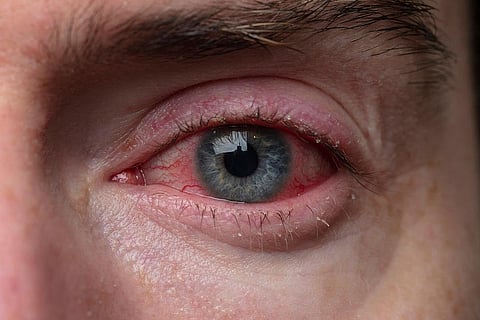

TUESDAY, Feb. 17, 2026 (HealthDay News) -- For patients aged 5 to 25 years, allergic conjunctivitis is associated with an increased risk for keratoconus and increased corneal diagnostic procedures, according to a study published in the February issue of Contact Lens and Anterior Eye.
Nathan Lishinsky-Fischer, from the Hebrew University of Jerusalem in Israel, and colleagues conducted a retrospective cohort study involving patients aged 5 to 25 years with allergic conjunctivitis and propensity score-matched patients with nonallergic conjunctivitis from the TriNetX U.S. Collaborative Network to examine the risk for keratoconus and related corneal complications.
A total of 174,443 patients were included in each cohort after matching. The researchers found that 118 patients in the allergic conjunctivitis group developed keratoconus compared with 62 in the control group, indicating a significantly increased risk for keratoconus (hazard ratio, 1.6). A significant association was also seen for corneal erosion with allergic conjunctivitis, with a hazard ratio of 1.87. The allergic group more often had corneal topography and advanced corneal diagnostic procedures, with hazard ratios of 1.94 and 2.05, respectively.
"Leveraging a propensity score-matched control group from a multi-institutional electronic health records database, a 60 percent increased risk of keratoconus was observed in patients with allergic conjunctivitis compared to a control group with nonallergic conjunctivitis," the authors write. "These results validate previous clinical observations and strengthen the case for allergic eye disease as a significant risk factor in the pathogenesis of keratoconus."
