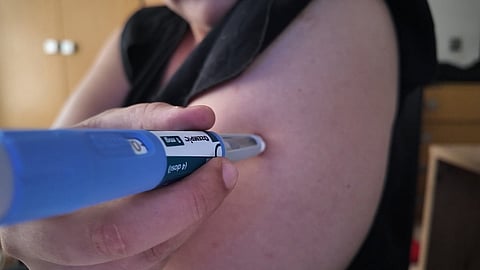

THURSDAY, Jan. 29, 2026 (HealthDay News) -- Use of glucagon-like peptide-1 receptor agonists (GLP-1 RAs) is associated with reduced postoperative revision following functional endoscopic sinus surgery (FESS) for up to five years among patients with chronic rhinosinusitis with nasal polyps (CRSwNP) and obesity, according to a study published online Dec. 7 in Otolaryngology–Head and Neck Surgery.
David Hoying, from Case Western Reserve University School of Medicine in Cleveland, and colleagues assessed the impact of GLP-1 RA prescriptions on the revision rate of FESS and the use of biologics post-FESS. The analysis included 1,391 propensity-matched pairs of patients with obesity (taking and not taking GLP-1 RAs) and undergoing FESS for CRSwNP.
The researchers found that patients taking GLP-1 RAs had a significantly reduced incidence of revision FESS versus the non-GLP-1 RA group at one-year (risk ratio [RR], 0.64) and five-year follow-up (RR, 0.60). At the five-year follow-up, the first-time biologic prescription was lower in the GLP-1 RA cohort versus the non-GLP-1 RA cohort (RR, 0.72).
"As the prevalence of obesity continues to rise, it will be important to continue to evaluate how obesity may impact the management of CRS," the authors write. "This study indicates that weight loss management may be one possible postoperative method for reducing disease recurrence in this patient population."