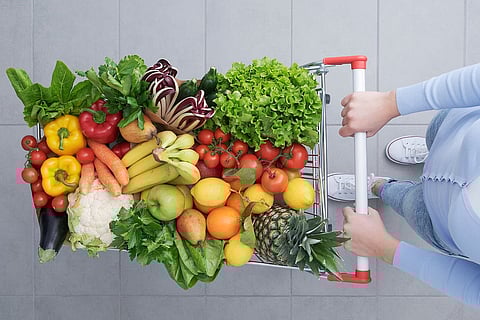

MONDAY, March 23, 2026 (HealthDay News) -- Higher combined consumption of fruits, vegetables, legumes, and potatoes may reduce the risk for Crohn disease (CD), according to a study published in the March issue of the American Journal of Gastroenterology.
Antoine Meyer, M.D., Ph.D., from Université Paris-Saclay in France, and colleagues assessed the risk for developing CD and ulcerative colitis (UC) based on intake of individual fruits, vegetables, legumes, and potatoes. The analysis included 341,519 individuals completing food frequency questionnaires who were followed for a median 13.4 years.
The researchers found that high combined intake of fruits, vegetables, legumes, and potatoes was associated with a lower risk for CD (fourth versus first quartile adjusted hazard ratio [aHR], 0.44; 95 percent confidence interval [CI], 0.26 to 0.76; P trend < 0.01). However, no significant association was seen for UC (aHR, 1.07; 95 percent CI, 0.76 to 1.50; P trend = 0.73). There was a lower risk for CD based on pooled consumption of apple/pear, banana, mushrooms, and onion/garlic (fourth versus first quartile aHR, 0.58; 95 percent CI, 0.33 to 1.02; P trend 0.03). Potato consumption was associated with a higher risk for UC (fourth versus first quartile aHR, 1.51; 95 percent CI, 1.05 to 2.17). There was no association between the diversity of fruits/vegetables/legumes/potatoes eaten and risk for CD or UC.
"Further works are needed to confirm our finding and to study implication for dietary guidance, particularly for people at a higher risk of inflammatory bowel diseases, e.g., first-degree relatives of patients with inflammatory bowel diseases," the authors write.
Several authors disclosed ties to the biopharmaceutical industry.