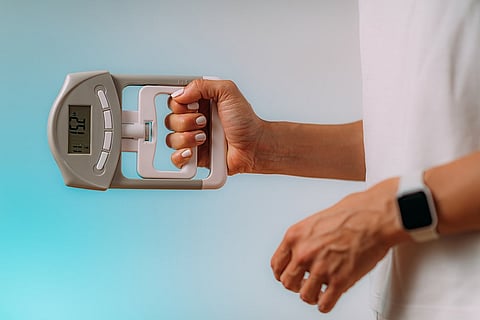

MONDAY, Feb. 9, 2026 (HealthDay News) -- Motor activities required for daily living are more strongly associated with psychosocial quality of life (QoL) than handgrip strength (HGS) for older adults with osteoarthritis (OA), according to a study published online Dec. 6 in the European Journal of Applied Physiology.
Asima Karim, M.B.B.S., M.Phil., from the University of Sharjah in the United Arab Emirates, and colleagues utilized data from wave 8 of the survey of health, aging, and retirement in Europe to examine the association between physical performance and psychological QoL in older adults with OA. Indicators of physical health included HGS and motor activities (walking, rising from a chair, climbing stairs, fatigue). QoL was assessed using the control, autonomy, self-realization, and pleasure (CASP)-12, which reflects the psychosocial aspects of mental well-being. A total of 30,923 individuals without OA and 7,591 with OA aged 50 years and older, from 28 European countries, were included in the study.
The researchers found that compared with non-OA participants, OA participants had significantly lower HGS and CASP-12 scores. In both groups, there was a significant positive association between CASP-12 and HGS, with r2 of 0.071 and 0.062 for men and women without OA, respectively, and r2 of 0.064 and 0.052 for men and women with OA, respectively. In both OA and non-OA groups, there was a strong negative association between difficulties with motor tasks and CASP-12 scores.
"The message is clear: in osteoarthritis, quality of life is shaped less by how strong your hands are and far more by whether you can move through the world with confidence and energy," Karim said in a statement.