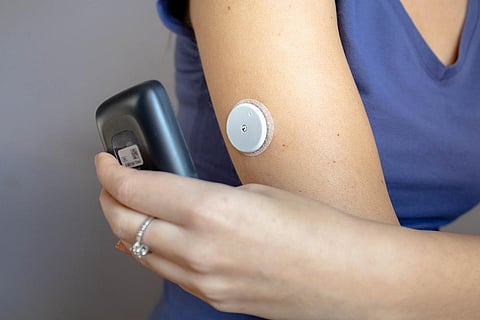

THURSDAY, June 11, 2026 (HealthDay News) -- For adults with type 2 diabetes (T2D) not on insulin therapy (NIT), continuous glucose monitoring (CGM) is associated with a substantial reduction in glycated hemoglobin (HbA1c), according to a study presented at the annual meeting of the American Diabetes Association, held from June 5 to 8 in New Orleans.
Tamara Oser, M.D., from the University of Colorado Anschutz in Aurora, and colleagues randomly assigned 283 adults with T2D-NIT and HbA1c ≥7.5 percent to a Dexcom G7 CGM device or routine care (RC) for 26 weeks. Blinded CGM data were obtained at baseline for both groups.
Overall, 40 and 37 percent of participants used an incretin mimetic (IM) and a sodium glucose cotransporter 2 inhibitor (SGLT2i), respectively. The researchers found that mean HbA1c was 8.6 ± 1.0, 8.6 ± 1.0, and 9.0 ± 1.5 percent in IM users, SGLT2i users, and those using neither medication, respectively. CGM was associated with a substantial reduction in hyperglycemia, with a 0.9 percent greater reduction in HbA1c in the CGM group versus the RC group after 26 weeks. Time in the glucose target range of 70 to 180 mg/dL was five hours greater per day with CGM than RC. Compared with the RC group, participants in the CGM group expressed greater satisfaction with glucose monitoring and reduced diabetes-related distress.
"These findings can help reshape diabetes management and expand treatment options for patients, improve glucose levels and A1C management for clinicians, and ultimately reduce diabetes-related complications," coauthor Thomas W. Martens, M.D., from the Park Nicollet Clinic in Minneapolis, said in a statement.
Several authors disclosed ties to biopharmaceutical and medical device companies, including Dexcom.
