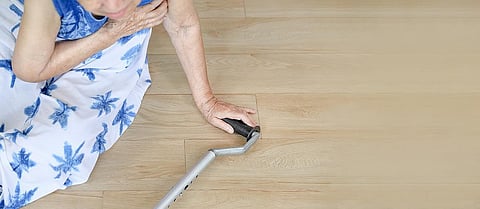

THURSDAY, Oct. 22, 2026 (HealthDay News) -- Masked hypertension (higher home than office blood pressure [BP]) is associated with a higher risk for falls in older adults, according to a study presented at the American Heart Association Hypertension Scientific Sessions, held from Oct. 7 to 11 in Arlington, Virginia.
Frances Wang, Ph.D., from the Beth Israel Deaconess Medical Center in Boston, and colleagues examined the association between BP phenotypes and fall risk among 758 very old adults (median age, 83 years; 82 percent taking antihypertensive medications). Office BP and home BP were measured using standardized protocols. BP phenotypes were categorized by the 2025 American Heart Association/American College of Cardiology high BP guideline definitions.
The researchers found that 34.5, 17.0, 15.4, and 33.2 percent of participants had sustained hypertension, had white coat hypertension, had masked hypertension, and were normotensive, respectively. Overall, 23.4 percent of participants reported at least one fall during a median follow-up of 350 days. White coat hypertension was associated with a lower incidence of falls relative to sustained hypertension (incidence rate ratio [IRR], 0.61), while higher fall risk was seen in association with masked hypertension (IRR, 1.70). Lower office relative to home BP was associated with higher fall incidence when analyzed continuously. In the subgroup taking antihypertensive medications, findings were consistent.
"Preventing falls in elderly adults should be a top priority. These findings highlight that, in addition to office blood pressure measurement, home blood pressure readings can be an important way to identify hidden home high blood pressure and risk of falls in older adults," Wang said in a statement.
One author disclosed ties to Siemens Healthineers.
