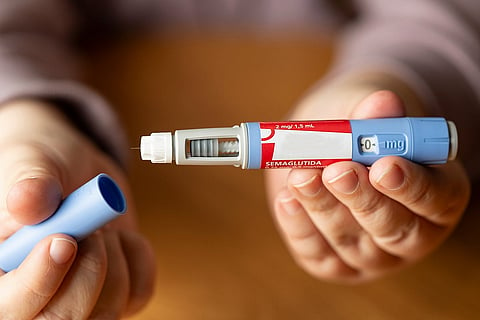

TUESDAY, June 9, 2026 (HealthDay News) -- For adults with type 2 diabetes and chronic kidney disease, two years of semaglutide treatment improves health-related quality of life (QoL) versus placebo, according to a study presented at the annual congress of the European Renal Association, held from June 3 to 6 in Glasgow.
Johannes F.E. Mann, M.D., from the KfH Kidney Center in Munich, and colleagues reported prespecified analyses of treatment effects on patient-reported QoL measured using the five-level EuroQoL-5-dimension (EQ-5D-5L) questionnaire at week 104 in the FLOW trial, which examined the effects of once-weekly semaglutide in adults with type 2 diabetes and chronic kidney disease. A total of 3,533 individuals were randomly assigned: 1,767 to semaglutide 1 mg once weekly and 1,766 to placebo.
The researchers found that health utility scores, based on five-dimension specific items (mobility, self-care, usual activities, pain/discomfort, and anxiety/depression) stabilized with semaglutide and worsened with placebo at week 104, with an estimated treatment difference of 0.021 ± 0.005; this was equivalent to eight additional days spent in full health per year with semaglutide. At week 104, all dimension-specific scores showed improvement from baseline with semaglutide versus placebo (estimated treatment difference range, −0.134 to −0.066), except for anxiety/depression. Visual analog scale scores had improved more from baseline with semaglutide than placebo at week 104, with an estimated treatment difference of 2.15 ± 0.51.
"Our findings reinforce the importance of a broader, patient-centered approach to treatment goals," Mann said in a statement. "They suggest that, overall, well-being may improve with semaglutide despite gastrointestinal side effects, complementing previously reported reductions in kidney and mortality risks."
Several authors disclosed ties to Novo Nordisk, which manufactures semaglutide.
