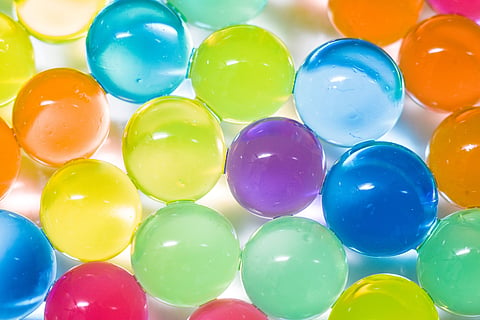

THURSDAY, May 7, 2026 (HealthDay News) -- Water bead ingestions among young children increased substantially from 2019 to 2024, according to a study published online April 30 in Academic Pediatrics.
Meg Meagher, from Nationwide Children’s Hospital in Columbus, Ohio, and colleagues characterized trends in water bead ingestions among children younger than 6 years old reported to U.S. poison centers. The analysis included National Poison Data System data from 2019 to 2024.
The researchers found that during the study period, there were 20,279 water bead ingestions. The rate increased nonlinearly by 6,531.5 percent from 2019 to 2023, followed by a decrease of 23.5 percent from 2023 to 2024. Similar patterns were seen for the rates for children at each year of age, both sexes, hospital admissions, and more serious medical outcomes. Most ingestions (95.1 percent) occurred in a residence and among children younger than 3 years old (66.5 percent). Most water bead ingestions were not treated at a health care facility (79.9 percent), but 18.6 percent were evaluated, treated, and released, while 1.0 percent were admitted. Most ingestions were judged as nontoxic or having minimal clinical effects possible. Most children were not followed (64.6 percent) or experienced no effect (31.7 percent), while 3.4 percent had minor effects and 0.3 percent had moderate effects. Five children experienced major effects, while 30 children received surgical intervention and three received ventilatory support or vasopressors.
"Although swallowing objects and putting them into an ear or the nose are common behaviors among children, water beads pose a unique risk of harm because of their expanding properties, and they’re hard to detect with X-rays," senior author Gary Smith, M.D., Dr.P.H., also from Nationwide Children's, said in a statement. "Additionally, because they are sold in sets of tens of thousands, misplaced water beads in the home are likely not to be noticed until found by an exploring child."
