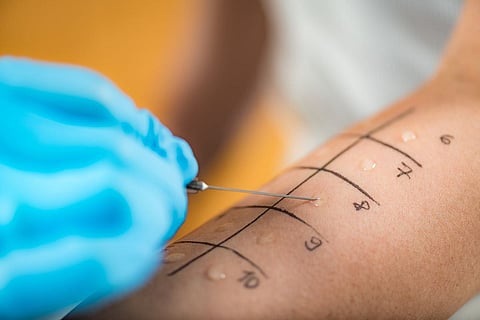

WEDNESDAY, Nov. 18, 2026 (HealthDay News) -- Despite knowing that food allergy (FA) panels often result in false positives, many clinicians keep ordering the tests, according to a study presented at the annual meeting of the American College of Allergy, Asthma and Immunology, held from Nov. 12 to 16 in Phoenix.
Mai Nguyen, M.D., Ph.D., from the Yale School of Medicine in New Haven, Connecticut, and colleagues examined ordering clinicians' rationale and understanding of broad FA panels. The analysis included survey results from 43 clinicians from a single institution who had ordered at least one FA panel.
The researchers found that 44 percent of respondents reported learning about FA panels after training. Most (85 percent) recognized that FA panels have high false-positive rates. Appropriate FA panel indications reported by clinicians included immunoglobulin E (IgE)-mediated FA (38 percent), urticaria (29 percent), and eczema (14 percent). Overall, 21 percent of clinicians reported previously ordering FA panels for patient/family requests. When asked to evaluate eczema triggers in a patient with a family history of FA, responses differed by role, with 30 percent of M.D./D.O.s and 63 percent of N.P./P.A.s agreeing that an FA panel would be indicated.
"Most of the clinicians we surveyed already knew these tests could lead to false-positive results, but many still ordered them despite current guidelines advising against their use," senior author Katelyn Wong, M.D., also from the Yale School of Medicine, said in a statement.
