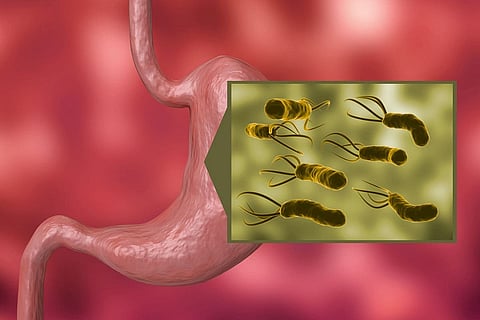

MONDAY, Sept. 14, 2026 (HealthDay News) -- Helicobacter pylori (H. pylori) exposure may contribute to the global burden of colorectal cancer (CRC), according to a study published online Sept. 8 in eGastroenterology.
Yunhao Li, from the University of Hong Kong, and colleagues estimated global and regional H. pylori exposure and its epidemiological association with CRC using data from systematic reviews and meta-analyses. CRC estimates were derived from the Global Cancer Observatory. The estimated related proportions (ERPs) were calculated to evaluate the related CRC burden.
The researchers found that H. pylori exposure was associated with a 1.59-fold increased risk for CRC, which was consistent across most subgroups. H. pylori eradication was associated with a reduced risk for CRC in limited observational studies, only after 10 years of follow-up. Globally, an estimated 22.0 percent of CRC cases were potentially related to H. pylori exposure under the pooled risk-attribution model based on estimates from 43 studies; when restricted to 14 population-based and cohort studies, corresponding estimates were lower. In settings with lower CRC incidence, H. pylori-related burdens were higher and increased with rising prevalence of H. pylori. Higher ERPs were suggested in later birth cohorts, while absolute case counts remained relatively stable.
"These findings may inform primary CRC prevention strategies, particularly in regions with high H. pylori prevalence and limited resources," the authors write.
