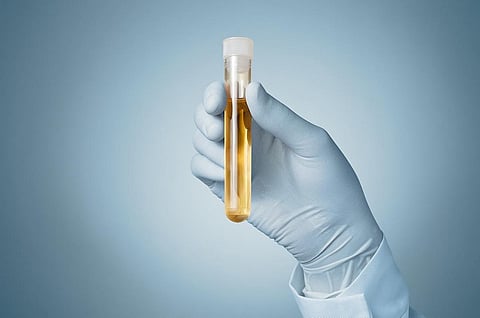

THURSDAY, June 4, 2026 (HealthDay News) -- Elevated concentrations of microbially derived metabolites (MDMs) in urine can identify autism spectrum disorder (ASD) in children aged 2 to 11 years, according to a study published online May 26 in Molecular Psychiatry.
Christina K. Flynn, Ph.D., from Arizona State University in Tempe, and colleagues measured the concentrations of many MDMs in the urine of 52 children with ASD and 47 healthy, typically developing (TD) children, aged 2 to 11 years, using semiquantitative liquid chromatography and mass spectrometry (LC-MS), followed by targeted quantitative LC-MS.
The researchers found that the concentrations of many MDMs were significantly higher in the ASD group versus the TD group, including phenylalanine-derived, tryptophan-derived, and yeast-derived MDMs. One or more MDMs at concentrations above those of any TD child were seen in almost all children with ASD, with concentrations sometimes 100 to 1,000 times higher. On average, children with ASD had three MDMs at levels above any TD child. Sensitivity was 90 percent and specificity 100 percent for classification using one or more elevated MDM.
"For many families, one of the biggest challenges is the waiting -- the not knowing," Flynn said in a statement. "If this test shortens that gap, even by a little, that's meaningful because earlier intervention can really help."
Several authors have patents related to diagnosis of ASD; several authors disclosed ties relating to companies involved in research into microbials and ASD.
