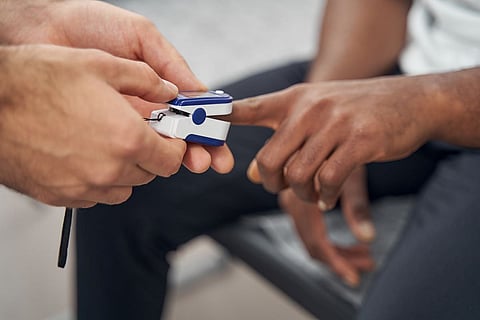

THURSDAY, Nov. 12, 2026 (HealthDay News) -- Pulse oximeter-based scoring may undercount breathing events in Black patients undergoing sleep apnea assessments, according to a study published online Nov. 4 in the American Journal of Respiratory and Critical Care Medicine.
Ali Azarbarzin, Ph.D., from Brigham and Women's Hospital in Boston, and colleagues examined whether the proportion of airflow-defined respiratory events associated with ≥4 percent oxygen desaturation differed across self-identified racial and ethnic groups. The analysis included participants without cardiovascular disease in the Multi-Ethnic Study of Atherosclerosis (MESA) and Sleep Heart Health Study (SHHS).
The researchers found that Black participants had 21 percent and 20 percent lower proportions of airflow-defined events meeting the ≥4 percent desaturation criterion than White participants in MESA (ratio, 0.79) and SHHS (ratio, 0.80), respectively. Compared with White participants, no other racial or ethnic group showed a lower proportion of airflow-defined events meeting desaturation criteria. Black and White participants had similar Apnea-Hypopnea Index-Delta Heart Rate 6 (AHI-ΔHR6) event detection in both cohorts. Desaturation-based events were associated with major adverse cardiovascular events (MACE) or all-cause mortality among White participants in MESA but not in the SHHS cohort. For neither cohort were desaturation-based AHI measures significantly associated with MACE or mortality in Black participants. AHI-ΔHR6 was associated with MACE or mortality in MESA (hazard ratio, 1.33) and SHHS (hazard ratio, 1.26).
"Our findings raise concern that pulse oximetry-based sleep apnea scoring may under-detect clinically relevant events in some Black individuals, with potential implications for diagnosis and severity classification," Azarbarzin said in a statement.
Several authors disclosed ties to the pharmaceutical industry.
