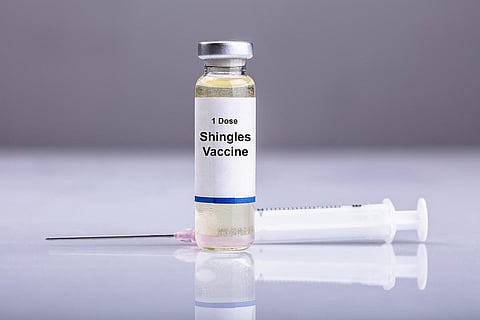

THURSDAY, March 19, 2026 (HealthDay News) -- For adults aged 50 years and older with a diagnosis of atherosclerotic cardiovascular disease (ASCVD), herpes zoster (HZ) vaccination is associated with a lower risk for major adverse cardiovascular events (MACE) and secondary cardiovascular outcomes, according to a study scheduled for presentation at the annual meeting of the American College of Cardiology, being held from March 28 to 30 in New Orleans.
Robert Nguyen, M.D., and Aditya Desai, M.D., from the University of California in Riverside, conducted a retrospective cohort study using data from the U.S. TriNetX database in adults aged 50 years and older with a diagnosis of ASCVD between Jan. 1, 2018, and Jan. 1, 2024, to examine whether HZ vaccination reduces cardiovascular risk in this population. After propensity score matching, 275,304 HZ-vaccinated and 275,304 unvaccinated patients were included.
The researchers found that HZ vaccination was associated with significantly lower risks for MACE, all-cause mortality, incident myocardial infarction, and stroke (hazard ratios, 0.54, 0.39, 0.73, and 0.73, respectively). In addition, HZ vaccination was associated with reduced risks for incident venous thromboembolism, heart failure, and atrial fibrillation or flutter (hazard ratios, 0.63, 0.67, and 0.70, respectively).
"This vaccine has been found over and over again to have cardioprotective effects for reducing heart attack, stroke and death," Nguyen said in a statement. "Looking at the highest risk population, those with existing cardiovascular disease, these protective effects might be even greater than among the general public."
